What do you want to talk about?
The idea you already know you want to communicate.

One idea.
Many real-world scenarios.
Scenario Studio gives you different real-world scenarios for the same idea, so you can see new angles, find relatable situations, and bring it to life with confidence.
The real problem
You need a new perspective.
You already know what you want to talk about. But it’s easy to keep seeing it through the same familiar examples, situations, people, or approaches.
Scenario Studio helps you explore different scenario possibilities without changing the core idea.
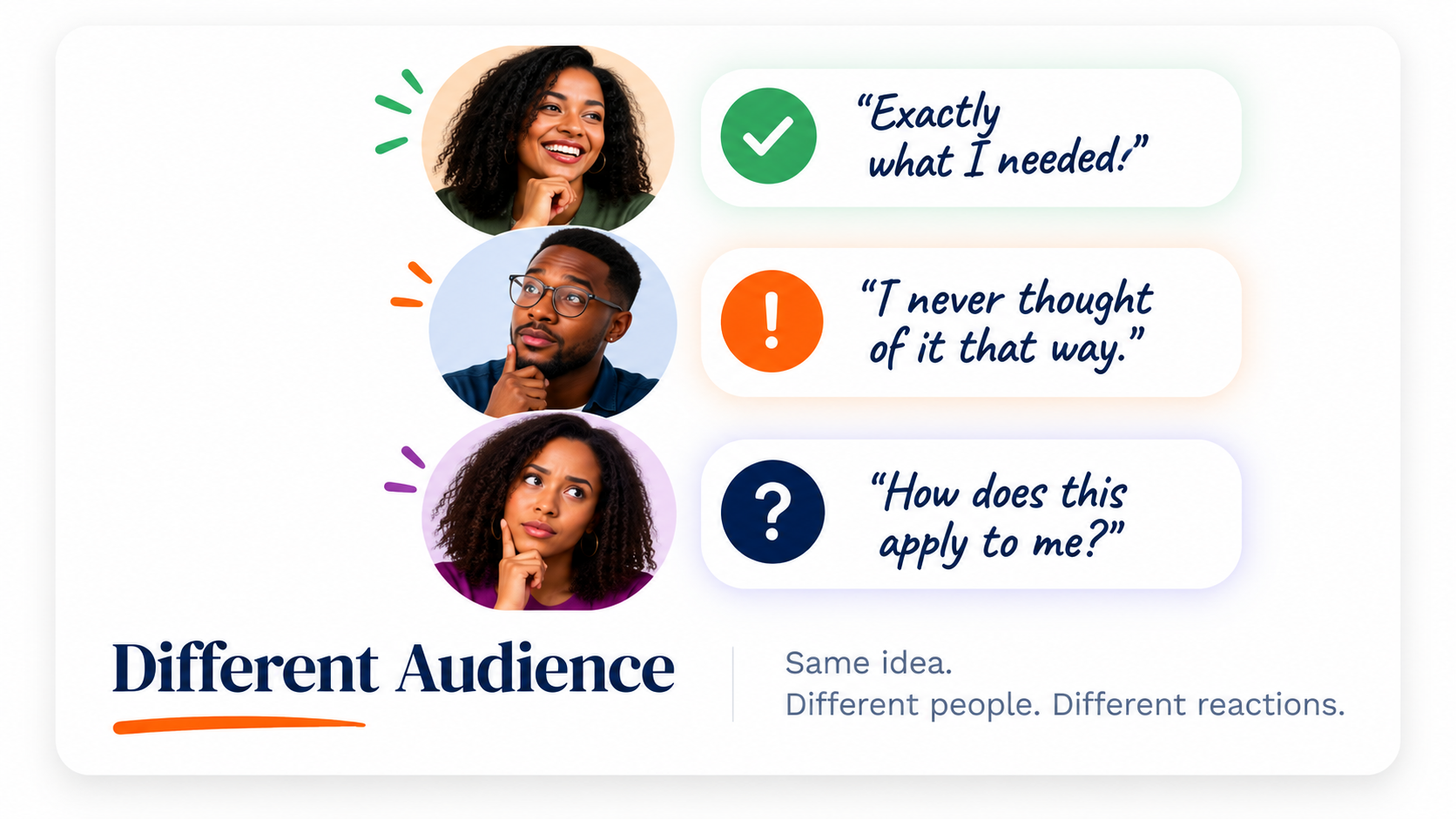
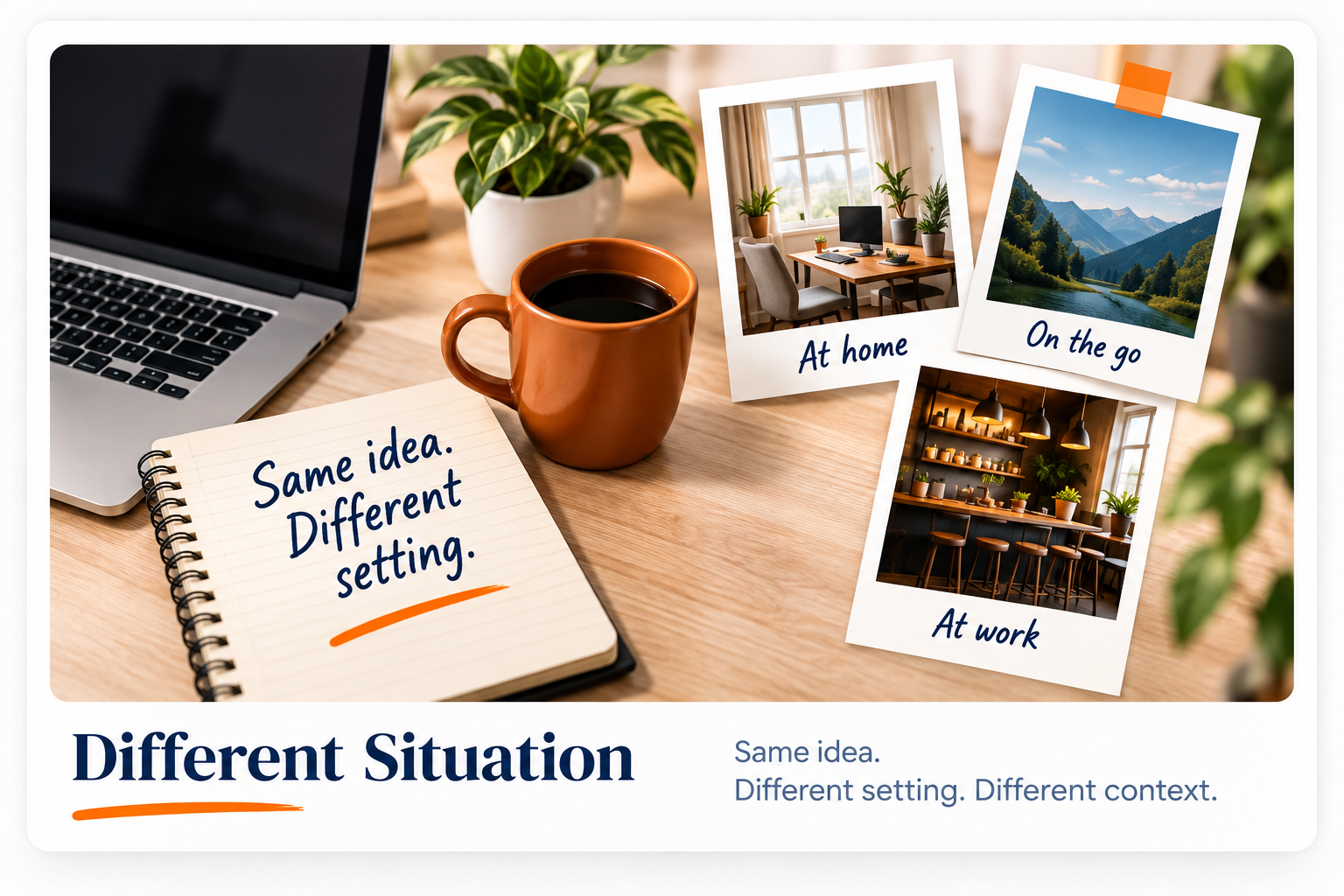
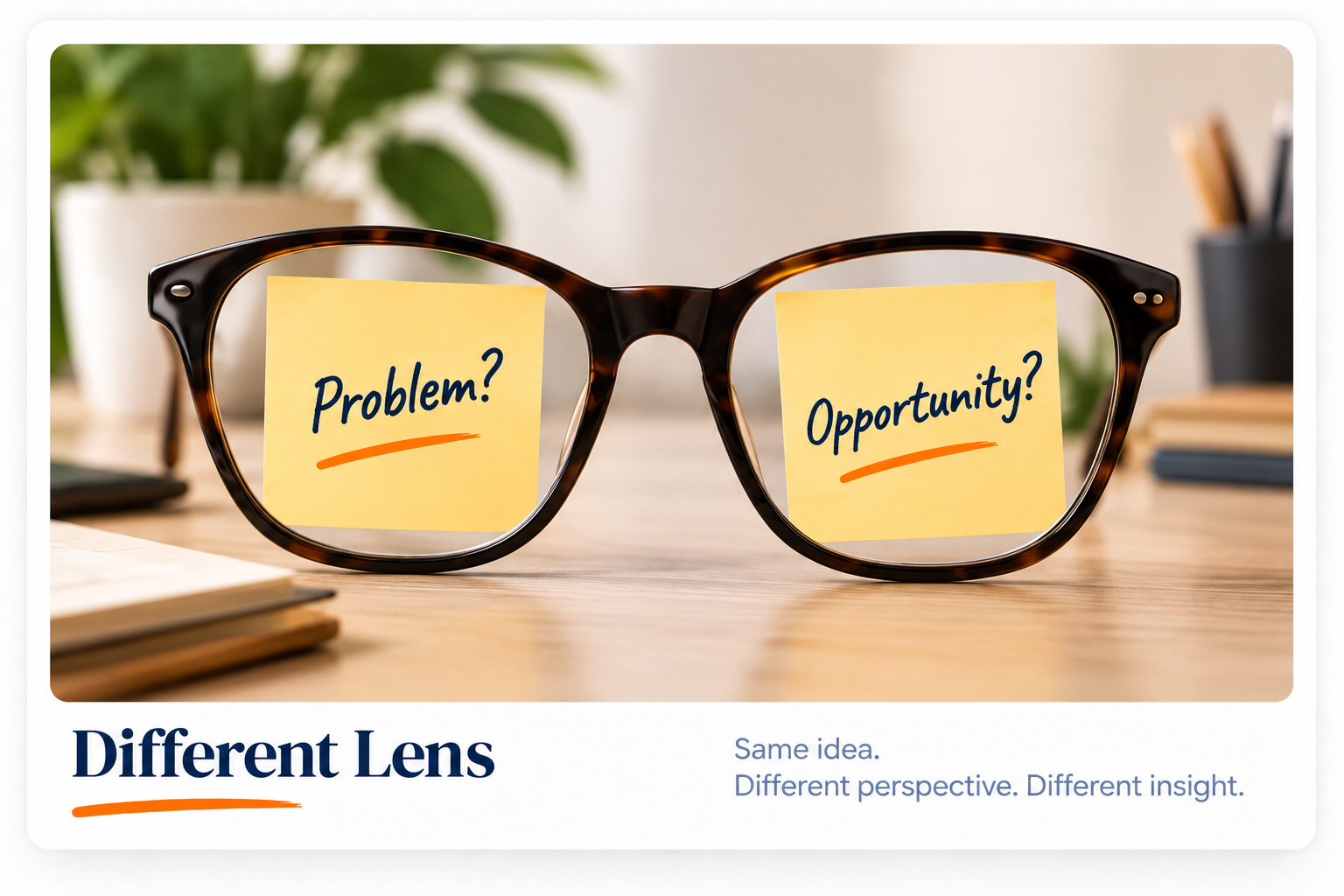
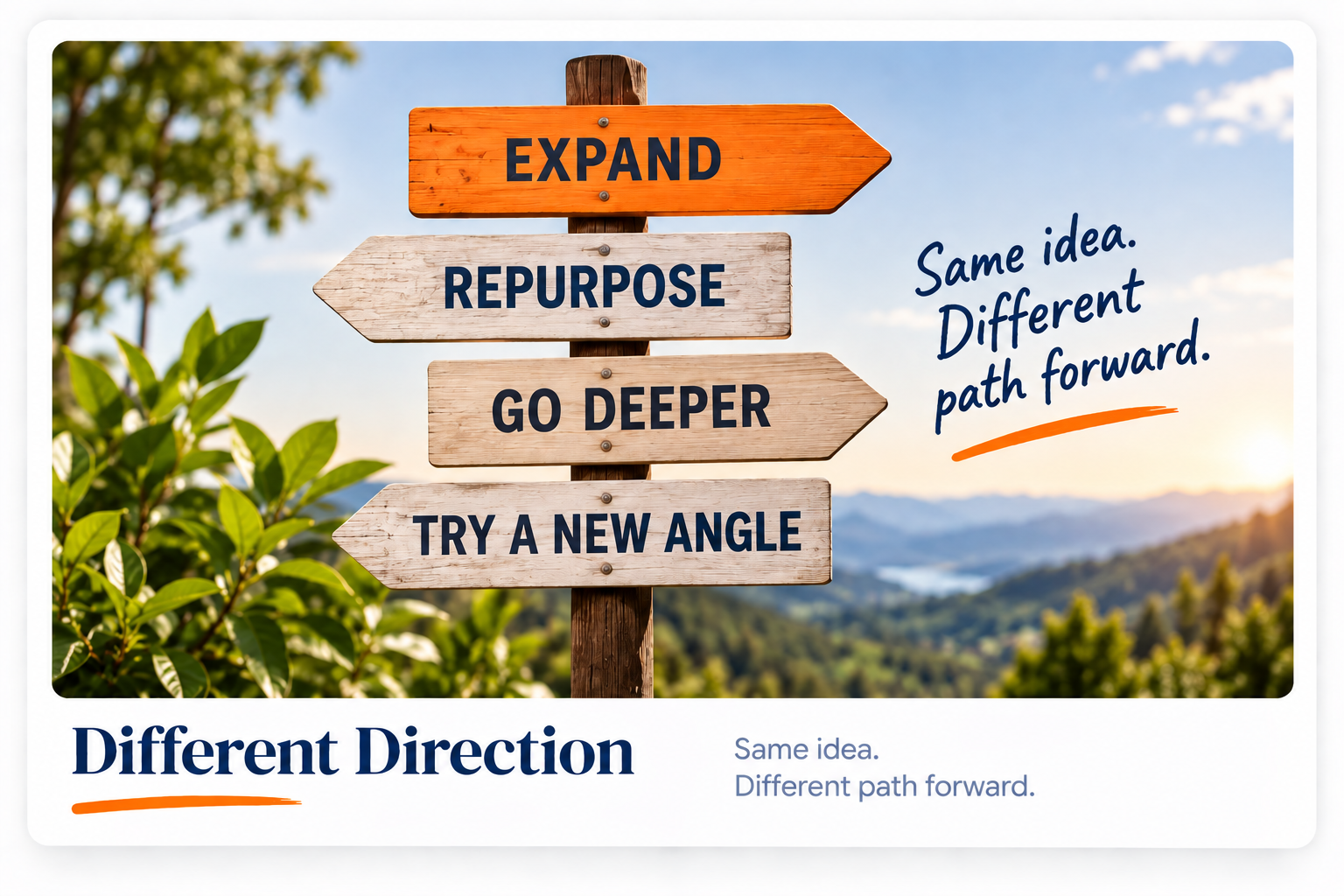
One idea can hold more angles than you think.
How it works
Answer four focused questions and Scenario Studio builds a set of different real-world directions around your idea.
The idea you already know you want to communicate.
Keeps every scenario relevant to the people you're speaking to.
A problem, experience, shift, or something your audience keeps running into.
Feel understood, see the practical value, recognize themselves, and more.
A real example
Here’s a look at actual scenarios generated in Scenario Studio and how differently the same idea plays out in each one.
Example topic
For Freelance designers in their first two years · Previewing 3 of 10 Studio Access directions
A designer is halfway through a careful brand system when a past client messages at 9pm asking for "one quick logo tweak" by morning. She says yes in eleven seconds, then spends the night rebuilding a file she never opened again, and hands in the brand system a day late with the spacing still off.
It captures the exact moment the yes happens - fast, reflexive, at night - so the audience sees their own habit rather than a lesson about boundaries. The cost lands on the work they cared about, not on their calendar.
Two freelancers compare the same month. One took six small projects; the other took three and used the gap to rebuild a case study. Six months later the case study is the reason the second freelancer stops sending cold emails entirely.
This direction moves the idea out of feelings and into a visible outcome over time, which makes the practical argument without turning into advice.
A client on a discovery call describes a project as "pretty simple" while listing nine stakeholders. The designer notices the mismatch, names it out loud, and watches the client visibly relax because someone finally described the project honestly.
It reframes no as clarity rather than refusal, and shows the client benefiting - a perspective flip the audience rarely hears.

Explore new angles, find relatable scenarios, and see more possibilities in the idea you already have.
Open the Studio